PRESENCE SLEEP
Launching a real, science-backed sleep service — delivered with love, for exhausted parents
Challenge: Presence hired me with a wide-open brief: research the baby health space, identify a business opportunity, and help shape what the product should become. The team had many possible directions, but no clear product focus yet. As the company's first design hire, I grew into owning the entire product end-to-end.
Insight: Parents were not simply looking for more information. They felt exhausted, guilty, and reluctant to ask for help. Sleep training felt emotionally loaded, but they were also running out of options.
The opportunity: A digital solution that assured parents they were not failing. The goal was to support parents with structure, reassurance, and science-backed coaching during one of the most emotionally difficult parts of early parenting.
What I did:
-
Led user and market research, facilitated alignment workshops with the founding team. Design is a team sport, and we needed to know where we stood to decide where to go next.
-
Took full ownership of the software/service offering and redesigned the business model to be software-only when the hardware track stalled
-
Translated a certified sleep coach’s expertise into a digital service, built and validated a functional prototype for a longitudinal study
-
Onboarded and managed an offshore team of developers, designers, managers, etc. to build out our software. Organized build into phased cycles while also managing tickets and backlog
Outcome:
-
Service designed for empathy: I translated a certified sleep coach's expertise into a structured, science-backed digital service
-
90% success rate among early service testers
-
-
Interaction designed for speed: I redesigned in-app interactions specifically for parents who have their hands full (literally!)
-
70% reduction in journaling task time
-
Reduced task time (getting to live stream) by 50%
-
Role - Founding Designer
Year - 2022
Client - Presence Sleep

THE CHALLENGE
Presence first hired me as a design research contractor. At the time, the team had a loose idea of what the company could become, and the product direction was still very open.
The initial opportunity space included hardware and software, smart nursery concepts, baby wellness, coaching, and even crypto.
Before we could design a product, we needed to answer a more foundational question:
What kind of support do parents actually need when caring for their child’s health and sleep?
My role quickly expanded beyond research. As the company’s first design hire, I became responsible for helping the team move from broad possibility to a focused product and service direction.
The loose-concept-word-cloud that I started with:
Hardware & Software
Smart Nursery
Baby wellness
Crypto
Coaching
RESEARCH QUESTION
What are parents’ main causes for concern regarding their child’s health?
RESEARCH PROCESS
Because the research topic was so broad, and because the founding team had different instincts about where the company should go, I kick-started this project with a user research → workshop → focused research process.
The first round of research helped us understand the emotional and practical concerns parents had around baby health. The workshops helped the team make sense of those findings together, surface assumptions, and align around where to focus next.
This process was important because the biggest challenge was not just discovering user needs. It was helping the team build shared conviction about which opportunity was worth pursuing.
Through that work, we narrowed the initial “baby health” concept into a more focused opportunity around sleep health, starting with nap time as the core experience to solve.


From baby health to sleep health
The research revealed that sleep was not just one care activity among many. It was the moment when several parents' anxieties collided.
When babies were awake, physical closeness gave parents some reassurance. But when babies were sleeping, parents were physically separated from them and often felt unable to fully relax.
Parents were asking themselves:
“Is my baby okay?”
“Am I doing this right?”
“Can I trust this advice?”
“Why does this seem to work for everyone except me?”
That shifted our focus from broadly tracking baby health to specifically supporting parents through the sleep journey.

Are we really agreeing? Visuals are a core part of my practice; I find it extremely powerful to translate perspectives, thoughts, and workflows into visual diagrams that stakeholders can react to. These help us build shared context by quickly identifying areas of misalignment, offering an opportunity to map our assumptions, and more.
KEY INSIGHT:
Currently:
😰
Parents are unable to fully relax when their baby is napping because something could happen at any time. And when their baby is not sleeping, parents were exhausted felt lost, alone, and unsure who to trust
Parents need both physical and cognitive support
Our Goal:
❤️🩹
Reassure parents they were not failing -- parenting, especially teaching children how to sleep, is truly hard. We set out to design a system that supported parents in caring for their children and for themselves.
Product direction
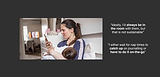
I worked closely with a certified pediatric sleep coach to translate her expertise into a structured digital service.
One of the most important principles was that there is no single “right” way to sleep train. The experience needed to understand each parent’s goals, comfort level, and constraints, then guide them through a personalized plan.
Product Principles:
-
The service needed to be science-backed without relying on vague or dramatic medical claims.
-
It needed to be flexible, because every family’s situation and tolerance level is different.
-
It also needed to be emotionally supportive, because parents were already carrying guilt, fear, and exhaustion.
-
Most importantly, it needed to be easy to use in the moment. Parents often had limited time, limited attention, and only one free hand.
Validating the service
To validate the concept quickly, I built a scrappy but functional prototype using tools like Figma, Protopie, Zapier, YouTube, and chatbot flows. Funny to think nowadays that would be a single vibe-coded prototype!
The prototype allowed us to test the actual service experience before investing in a full build. Parents could move through the plan, receive guidance, watch videos, and share feedback during the process.
This helped us learn not just whether parents liked the idea, but whether the service could actually support them over time.
The early service reached a 90% success rate among testers.

Designing for exhausted parents
The product also needed to support parents in the small, repeated moments of care: logging events, checking on the baby, timing crying episodes, and understanding progress over time.
Because parents’ hands were rarely free, the interaction model had to be lightweight. I designed a holistic pediatric health journaling system optimized for one-handed use, along with flows for faster access to key baby-care actions.
The goal was not to ask parents to track more. It was to reduce the effort required to capture what mattered.
The redesigned journaling experience reduced task time by 70%, and the time required to access the live stream was reduced by 50%.

Preparing for build
As the product direction became clearer, I also helped prepare the experience for implementation with an offshore development team.
I created flow diagrams, prototypes, and detailed feature documentation to bring more specificity to Jira tickets and reduce ambiguity across teams.
This became especially important because the product was part app, part service, and part behavior-change experience. The team needed more than static screens; they needed a shared understanding of how the service worked over time.


What this project shows
Presence Sleep was an early example of how I work across ambiguity.
I helped a founding team move from many possible directions to a focused product strategy, used research to align stakeholders, translated expert knowledge into a digital service, and built scrappy prototypes to validate the experience before full development.
The final product was not just a baby sleep app. It was a science-backed coaching service designed to make exhausted parents feel supported, capable, and less alone.